M9 – Museum of the 20th Century Inaugurates "PLAYERS. Games, Video Games, Culture, and Society"
The exhibition will be open from October 14, 2026, to February 14, 2027, on the third floor of the Museum


Venice Mestre, October 13, 2026 - Video games are today one of the most robust and influential cultural industries in the world. It is a mature market that involves billions of people, thanks to a language that has established itself for its quality, depth, and storytelling ability, capable of conversing on par with cinema, literature, and visual arts. It is the result of eighty years of history, which has traversed science, visual languages, art, and popular culture, shaping the imagination of entire generations.
This is the genesis of PLAYERS. Games, video games, culture, and society, the exhibition inaugurated today at M9 – Museum of the 20th Century in Venice Mestre, open from Wednesday, October 14, 2026, until February 14, 2027, on the third floor of the Museum. The curation is by Fabio Viola, professor and game designer, with Michelangela Di Giacomo, Giuseppe Cosenza, and Damiano Bordoni. The exhibition tells the story of video games for what they are: a complete expressive form and a cultural and social phenomenon capable of uniting generations, languages, and contexts. The narrative spans from pioneering research laboratories to 1980s arcades, from children's bedrooms to family living rooms, up to the screens that accompany us everywhere today.
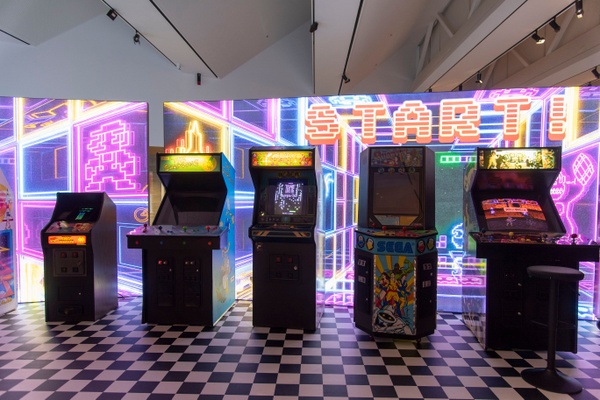
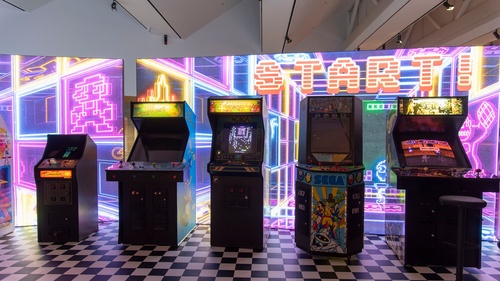
The PLAYERS exhibition guides visitors through this history and recreates its decisive environments in the hall: from the first gathering places, the amusement arcades, to domestic spaces. It is a journey from original historical arcade cabinets of the era — including examples of Computer Space and Pong, pioneering testimonies of video game history, and a rare Dragon’s Lair cabinet — to consoles, where the public can play and thus become an active part of the experience. Alongside devices and games, there are unprecedented objects and materials, never before exhibited, from collections and cultural entities related to the world of gaming. The journey is further enriched by interviews conducted specifically for the exhibition with international protagonists of video game history, alongside original objects they have provided: Sid Meier, from California, Yuka Kitamura, from Tokyo, and Jon Wilcox, associated with the Team17 Worms development team, from the United Kingdom. Important lenders and cultural institutions have contributed to the exhibition, providing works, objects, and materials, including Arcade Story, elettroLudica – Museum of Electronic Entertainment, Lucca Comics & Games, the Museum of Pop Culture, the National Cinema Museum, Nintendo Italia, Sony Interactive Entertainment Italia.
The exhibition project curated by architect Valentina Babolin and multimedia designer Vinicio Bordin interprets the video game universe through a contemporary and sophisticated reinterpretation of pop imagery. The visitor's journey combines traditional staging with highly immersive environments, blending architectural, graphic, and multimedia languages to offer a constantly different experience in each room.
Gallery
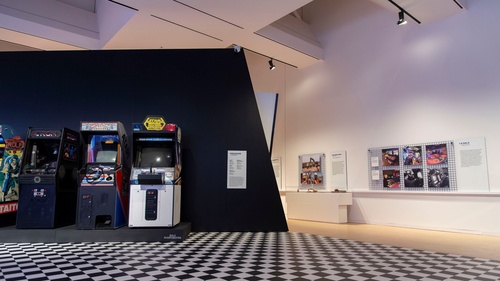
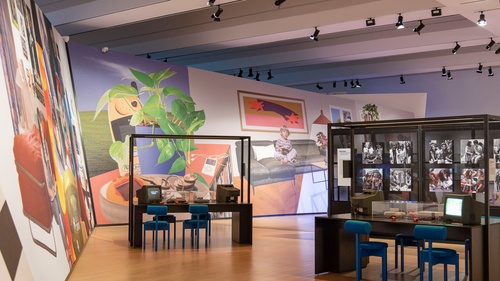
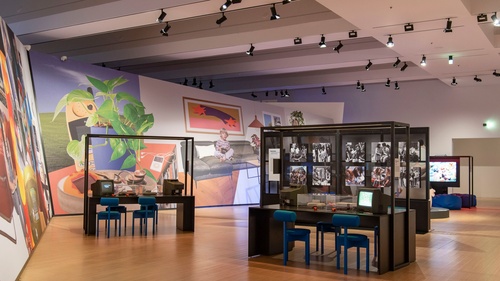
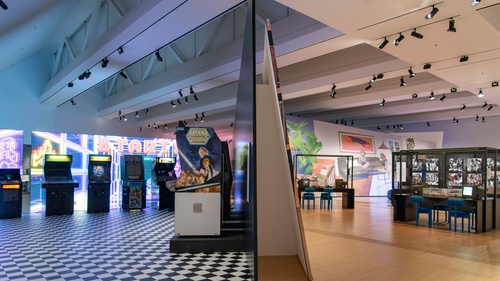
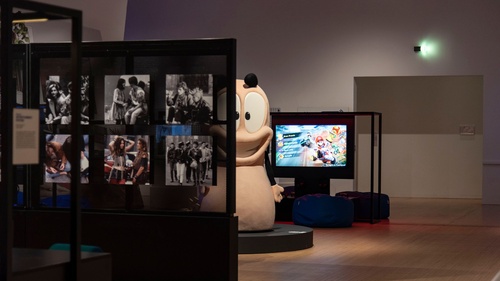
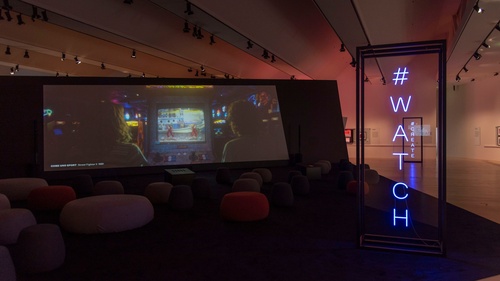
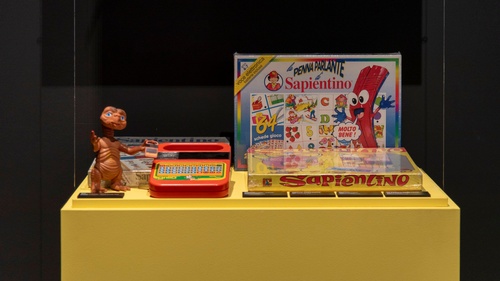
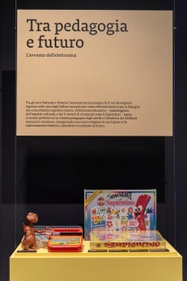
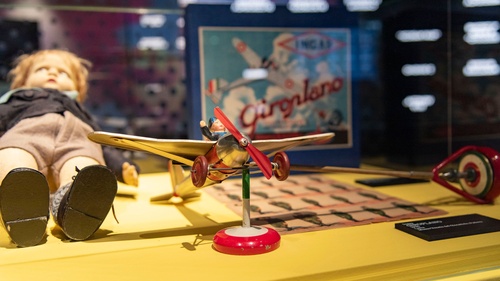

The exhibition alternates narrative and interactivity and is divided into three sections.
The first, #Play, traces the history of video games as a medium and a social practice, from experiments on early computers to the consoles that now inhabit our living rooms. Playable titles range from prototypes born in university settings in the 1950s and 60s to Atari games of the 70s. They then move through arcade cabinets and arrive at the Super Nintendo and Sega Mega Drive, present in the bedrooms of many children and teenagers of the nineties. In the area dedicated to contemporary gaming, PlayStation®5 (PS5®) will be present with an official selection of video games curated by Sony.
#Watch explores video games as a spectacle: their dialogue with cinema and visual arts, the birth of eSports, and new forms of shared entertainment. The section features cinematic sequences, walking simulators, virtual photography, the language of eSports broadcasts, and streaming culture. It shows how video games present themselves to the eye with the same force as a film, a work of art, or a performance. Titles include milestones such as Dragon's Lair, Detroit: Become Human, Limbo, Death Stranding, Ico, and Shadow of the Colossus.
#Create delves into the heart of the creative process. It tells the story of authors who have made video games an original and recognized form of expression. It also shows how today the public itself can become a protagonist. Contemporary ecosystems allow anyone to design levels, worlds, rules, and experiences, blurring the line between those who consume and those who create. This section features Super Mario Maker, Dreams, and Minecraft.
At the center of the exhibition are not machines, but people: those who invent, those who create, those who play, and those who watch. A journey designed for a broad and diverse audience of historical enthusiasts, Gen Z, families, but also simply curious individuals, capable of telling how video games have become, in eighty years, one of the greatest forms of language and imagination of our time. A special opportunity also for schools to approach this world rich in insights and interactive narratives capable of enriching students' education by developing their creative and analytical skills.
Accessibility will also be central to the exhibition experience and usability: for two Fridays a month, visitors with disabilities will have access to Jimmy, the standing wheelchair designed by the Venetian company Bemoove, which for the first time ever in a museum context, will allow them to move independently in an upright position and visit the exhibition.
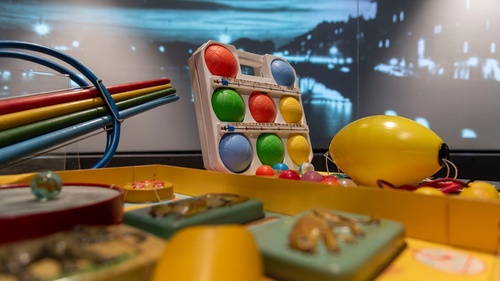
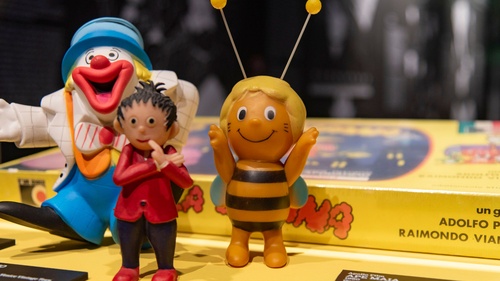
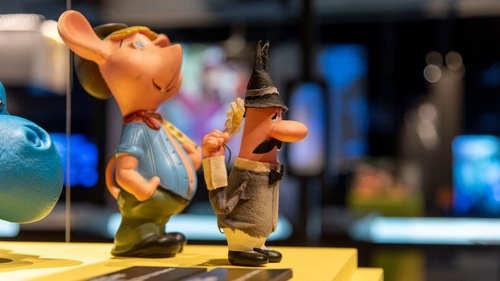
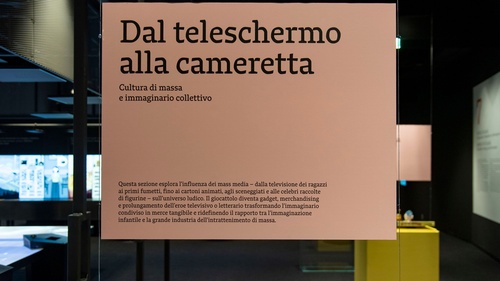
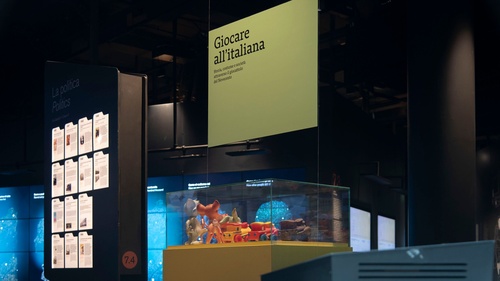
Throughout the exhibition, the permanent exhibition Playing Italian Style. History, Custom, and Society Through 20th Century Toys will also be open. The exhibition, curated by Director Serena Bertolucci and M9 curator Giuseppe Saccà, illustrates the history of play and its evolution before the advent of video games, thus representing the premise that leads to the narrative of PLAYERS: a story that traces the twentieth century, using toys as a seismograph of the country's social, economic, and cultural changes. Through an itinerary that moves from the humble materials of artisanal tradition to the propaganda of the Ventennio, from the design of the economic boom to reflections on gender roles and the sociality of backyard and board games, the exhibition reaches the impact of mass media and the first impulses of educational electronics, offering a true anthropological X-ray of Italy before the digital revolution. The exhibition is enriched by objects from private collections and the archives of the MiC - Regional Directorate of National Museums Veneto, the National Museum Salce Collection (Treviso), and the Veneto Toy Museum (Padua), and of Creature di Gomme – Venice Vintage Toys, Clementoni, and Dal Negro, who contributed to its production.
“We are truly proud to present today an exhibition that we strongly desired and that applies M9's unique and original method in exploring a theme that is unusual to address in museum contexts,” declared Vincenzo Marinese, President of the Fondazione di Venezia. “A highly topical theme that accompanies us in discovering the new frontiers of technology, but also of historical relevance, as video games are the only form of play born in the twentieth century. In this exhibition, we wanted to tell its historical and social depth and its intertwining with art and science as only M9 can do, in an experience to be lived and played.”
“PLAYERS is an exhibition that tells the story of the twentieth century much more than it appears at first glance. Video games, in fact, stand as one of the most interesting common threads between the two centuries, reflecting their historical, social, and technological roots in the present,” commented Serena Bertolucci, Director of M9 – Museum of the 20th Century. “For this reason, in parallel with the major exhibition on the third floor, we have set up a path in the permanent exhibition that shows how video games are useful for explaining the twentieth century also through what came before: from dolls to marbles, passing through cards and beach games, the history of play tells a world of creativity, innovation, and design of which our country has been an extraordinary protagonist.”
“With PLAYERS. Games, video games, culture, and society,” declared Fabio Viola, curator of the exhibition, “we wanted to tell the story of video games for what they have truly become: not simple entertainment, but a language capable of traversing science, art, and the daily lives of entire generations. It is an exhibition that speaks of people even more than technology, and that invites visitors to become an active part of the story.”
Similar articles