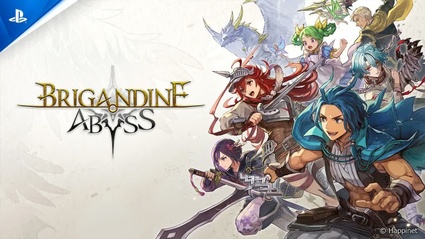
Brigandine: Abyss — Review: A Huge Tactical RPG That Could Have Been So Much More
Six campaigns, incredibly deep strategic maps, army customization, and a grid-based tactical system that rewards planning. Too bad for the extremely slow combat, inconsistent balancing, and complete lack of Italian localization.


Brigandine: Abyss is a tactical RPG that unashamedly looks to tradition, reviving that philosophy of strategic maps, territories to conquer, armies to organize, and battles fought on a grid. It's a genre that has reinvented itself multiple times in recent years, but here the developers choose a different path: they don't necessarily seek to simplify the experience, but rather to build a huge game, rich in systems and possibilities.
The result is an ambitious title, clearly designed for those who love to spend time in menus, studying their army, thinking about troop composition, and approaching every clash with a minimum of preparation. The structure recalls that of the great turn-based strategy games of the past, with a management component that constantly accompanies the player and a tactical combat system that represents the true heart of the experience.
Brigandine: Abyss therefore has no intention of being an immediate game. It wants to be studied, analyzed, and slowly assimilated. And it is precisely here that its greatest strengths and some of its most obvious problems are simultaneously found.
Gallery
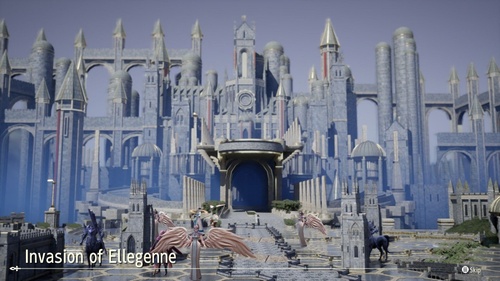
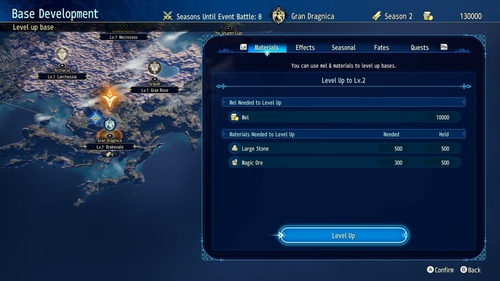
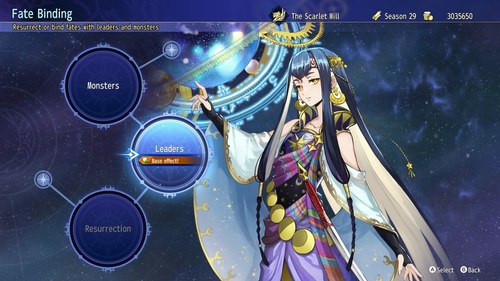
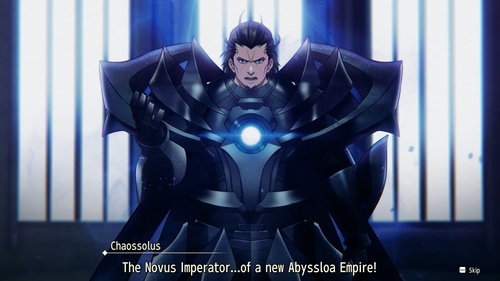
Six Factions, Six Perspectives, and a Pace That Doesn't Get Lost
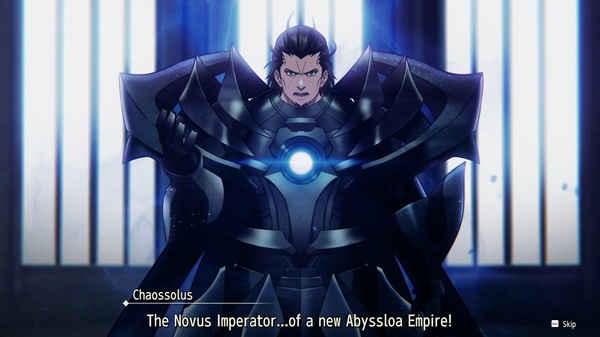
The story represents one of the most pleasant surprises of this production. Compared to other chapters and some experiences of the same genre, Brigandine: Abyss chooses a decidedly more direct approach.
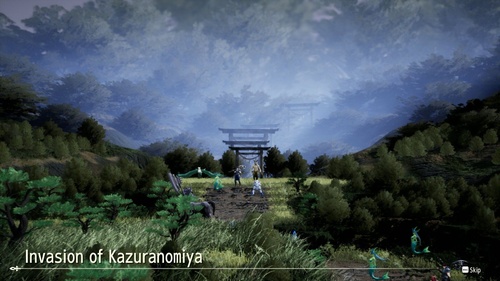
The narrative incipit doesn't waste too much time and quickly brings the player into the conflict, presenting factions, characters, and motivations at a fairly rapid pace. We are not facing a narrative built exclusively to slow down the action: the story accompanies the gameplay and constantly tries to push the experience forward.
The game world is built around the clash between different factions, each with its own protagonists, objectives, and points of view. The presence of six campaigns allows observing events from different perspectives and represents one of the most interesting elements of the entire production.
Although it doesn't reach the narrative complexity of titles like Fire Emblem: Three Houses or Final Fantasy Tactics, the narration works mainly because it doesn't get excessively lost along the way. Dialogues, events, and conflicts arrive with good frequency and manage to keep interest alive.
It's a story that does its job, without necessarily wanting to become the main reason to keep playing. And, considering the amount of content present, it's probably the right choice.
Strategic Map, Tactical Grid, and Frightening Depth
This is where Brigandine: Abyss truly shines.
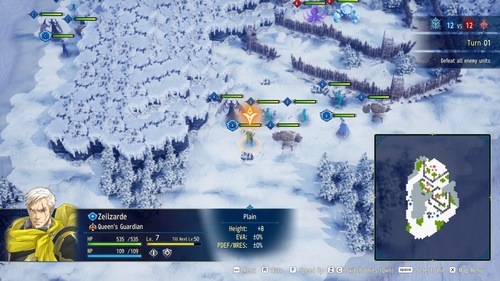
The gameplay structure is extremely layered and combines resource management, conquest and administration of territories on the geopolitical map, army organization, and tactical grid combat. These are many elements that, on paper, could risk conflicting with each other, but which are integrated in a surprisingly effective way.
The strategic map represents the starting point for every decision. You must choose where to move your forces, which territories to defend, which to conquer, and how to distribute your resources. Every choice can have consequences on the next game and makes army management a fundamental component, not a simple interlude between battles.
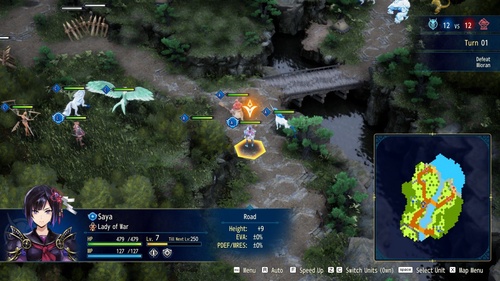
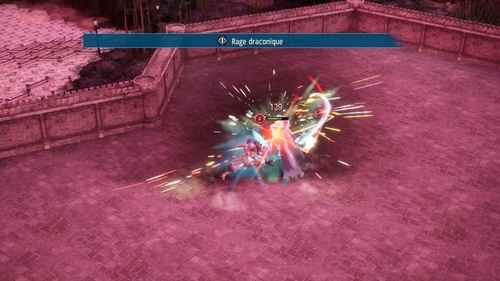
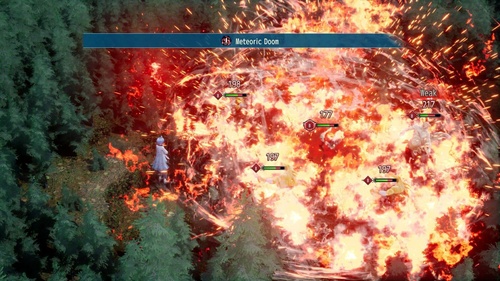
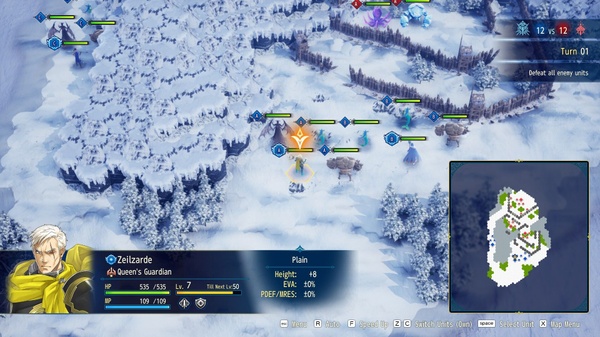
Then come the clashes. The grid-based tactical system is deep and rewards planning. Positioning, unit composition, combatant characteristics, and ability management become fundamental to get the most out of your troops. Army building also allows for a lot of experimentation, choosing which units to use and how to combine combatants, monsters, and support troops.
The character progression is particularly successful. It's not just about the growth of the main protagonists: even support combatants can evolve, improve, and take on an increasingly important role within the army. This makes every loss and every composition choice much more significant.
The system works precisely because it forces the player to think about the whole and not just the individual character.
It's a shame, however, that all this is accompanied by some significant problems.
The first concerns the pace of the clashes. It's too slow. In some cases, tremendously slow. The management of individual units and the need to constantly approach opponents, also due to the absence of real long-range attack possibilities, enormously prolong battles.
It's not uncommon to have clashes lasting twenty or thirty minutes, especially when the battlefield is crowded. And when this situation repeats itself multiple times, the problem stops being occasional and becomes structural.
The difficulty also presents several problems. The balancing is not always convincing and, in several campaigns, the challenge level tends decidedly downwards. Some situations can be circumvented simply by exploiting some basic mechanics, making certain battles much less demanding than they should be.
On the contrary, at certain moments the game suddenly manages to become much more severe, creating an uneven difficulty curve.
The counterattack system, then, in certain situations appears clearly unbalanced. Some classes, especially the more resistant ones, can exploit this mechanic too effectively, managing to transform some tactical situations into something almost automatic.
And then there's the interface. The first few hours are a real bombardment of menus, submenus, systems, information windows, tutorials, and explanations. The amount of information is enormous and the game doesn't always manage to distribute it in the most natural way possible. Some tutorials are even superfluous and end up increasing confusion instead of reducing it.
Once this initial phase is overcome, however, everything slowly begins to fall into place and the depth of the system is understood.
Six Campaigns and Enormous Replayability: Plenty of Quantity, Not Always Variety
One of the great strengths is undoubtedly the amount of content.
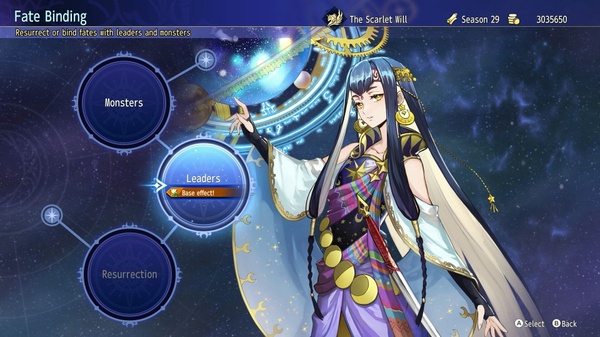
The six factions and six campaigns guarantee very high replayability, while the dedicated single-mission mode adds further material to tackle. The ability to change faction, army composition, and strategic approach makes each new game sufficiently different from the previous one.
But there's an important limit. Although the factions have different beginnings, characters, and dialogues, the general structure of the battles remains substantially the same. The context changes, the armies change, some situations change, but the fundamental experience remains very similar.
Consequently, replayability is enormous, but after several hours a certain feeling of "more of the same" inevitably emerges.
It's a lot of quantity, but not always accompanied by the same qualitative variety.
Convincing Art Direction, Less So Technically: Good But Not Surprising
Artistically, Brigandine: Abyss is much more convincing than the technical department might suggest.
The character design is clearly oriented towards an anime and manga aesthetic, with recognizable characters and an art direction that manages to give personality to the different factions. It is probably one of the most successful aspects of the entire production.
The sound department also deserves particular praise. The music accompanies both strategic moments and clashes well and, above all, manages to create the right atmosphere during menu navigation and preparation phases.
Technically, however, the discourse changes. The game inevitably draws inspiration from much more important and recognizable productions, but it doesn't always manage to reach the same level of quality. The impression is that of a title that perfectly knows the references it looks to, without always having the means to compete with them in terms of overall realization. The result remains pleasant, but not surprising.
The Lack of Italian: A Serious Problem for Such a Dense Title
There is, however, a flaw that, personally, I consider particularly significant, namely the complete absence of the Italian language.
In 2026, knowing English is almost a necessity for those who play regularly, this is true. The problem, however, is not simply translating dialogues.
Brigandine: Abyss presents the player with an enormous amount of text, statistics, abilities, menus, descriptions, tutorials, and specific terminology. It's not always the everyday English we might encounter in other video games: often, one needs to understand systems and mechanics through specific terminology.
For such a large, complex, and information-rich title, an Italian localization would have made an enormous difference.
Not because the Italian player is unable to understand English, but because not everyone wants to turn every gaming session into a translation and study exercise. And when the title requires tens and tens of hours, the issue becomes even more evident.
It's a missed opportunity.
Score
Editorial team
Brigandine: Abyss — Review: A Huge Tactical RPG That Could Have Been So Much More
Brigandine: Abyss is a good game. It could have been so much more.
The foundation is excellent: the strategic system works, army management is deep, customization offers many possibilities, and the six campaigns guarantee a truly impressive amount of content. The problem is that all this depth is weighed down by an initially cumbersome interface, unbalanced difficulty, excessively slow combat, some not perfectly balanced mechanics, and a structure that, despite the six campaigns, inevitably ends up re-proposing the same experience very often.
And then there's the absence of Italian, which for a title with this amount of content really weighs heavily.
Those who love old-school tactical RPGs, however, will find plenty to sink their teeth into.
Similar articles