Magic: The Gathering — The Hobbit: Guide to Middle-earth Cards and Mechanics
From Samwise's Food to the Ring tempting Frodo: everything you need to know about the Hobbit cards in Magic: The Gathering Tales of Middle-earth, the most successful crossover in the game's history.
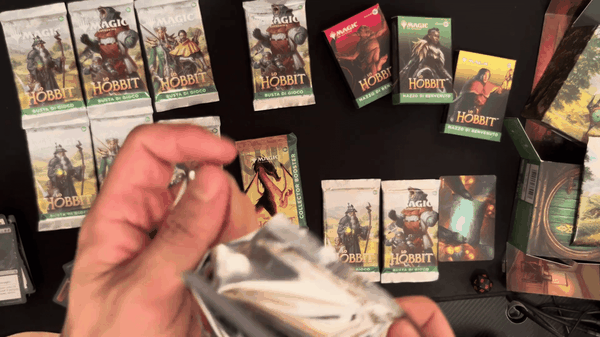


Returning to Middle-earth
The Lord of the Rings: Tales of Middle-earth represents one of the most successful crossovers in the history of Magic: The Gathering, bringing the universe created by J.R.R. Tolkien into the game. Among these, we remember "The One Ring," which not only returns... but I even found it among my draws. Within the set, Hobbits play a central role, embodying themes of friendship, courage, simplicity, and the ability to overcome seemingly insurmountable adversaries.
The most characteristic mechanic associated with Hobbits is Food, artifacts that can be sacrificed to regain life points and activate numerous secondary effects. Many Hobbit cards create Food tokens or gain advantages when these are used. This choice is not random, as it directly recalls one of the most iconic aspects of Shire culture: the love of good food, conviviality, and the many meals of the day. In terms of gameplay, Food allows players to increase their survival and generate consistent value throughout the game.
Another fundamental mechanic is The Ring tempts you, which represents the growing influence of the One Ring on the protagonists. Each time this ability activates, the player advances along a kind of evolutionary path that grants new abilities to their Ring-bearer. Frodo is the character most closely tied to this mechanic, which faithfully reproduces his journey and difficult relationship with the Ring's power. From a strategic point of view, this ability allows even seemingly modest creatures to transform into extremely dangerous threats.
Hobbits are generally low-cost creatures with not particularly high stats, but compensated by strong internal synergies. Their playstyle focuses on gradually building advantage, producing resources, and the ability to gain continuous benefits throughout the game. Rather than relying on brute force, Hobbit-themed decks reward planning and efficient management of one's cards, requiring the player to have good strategic ability.
From a narrative perspective, the design of the Hobbits is extremely faithful to Tolkien's works. Their cards do not seek to represent invincible warriors, but common individuals who manage to accomplish extraordinary feats thanks to determination, friendship, and mutual support. This concept is translated into the game through abilities that reward teamwork and cooperation between permanents.
The strongest cards dedicated to Hobbits undoubtedly include Samwise Gamgee, one of the best Food generators in the set and a fundamental card for any Shire-based strategy. Frodo, Adventurous Hobbit is a growing threat that makes the most of the Ring mechanic, becoming increasingly dangerous as turns pass. Peregrin Took represents one of the most efficient engines for Food generation and can create extremely powerful combinations in multiplayer formats. Rosie Cotton of South Lane is highly valued for her ability to distribute +1/+1 counters and quickly empower the entire Hobbit army. Finally, Merry, Warden of Isengard offers excellent offensive support, helping to make the deck more aggressive and dynamic. These cards form the core of the most effective Hobbit strategies and are considered among the best playable representations of the Shire characters.
Overall, the Hobbits of Magic: The Gathering perfectly capture the essence of Tolkien's works. Through mechanics like Food and The Ring tempts you, the set translates the central themes of The Hobbit and The Lord of the Rings into gameplay terms, offering a unique, fun, and strongly narrative-driven playstyle.
Similar articles