Inquisitor Shepherd, previewed: Faith becomes algorithm in an inescapable investigative thriller
Three hours delving into the demo from South Korean studio Narrowdeep, where an undercover investigation in a remote village quickly gives way to a dystopian nightmare.
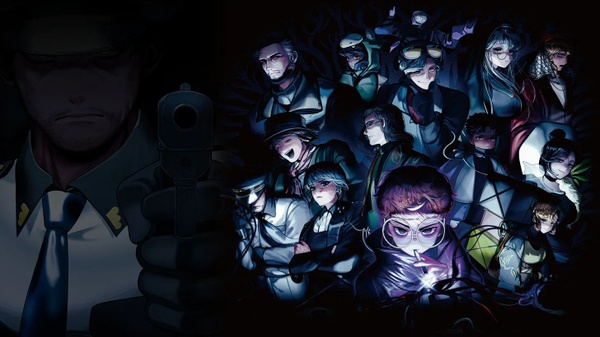


In the landscape of investigative visual novels, finding a convincing balance between narrative density and active participation remains one of the most complex challenges for developers. Too often, the genre relegates players to a passive role, reducing interaction to a mere sequence of clicks with no real impact on the investigation's progress, as also happened in promising licensed productions like Psycho-Pass: Mandatory Happiness. Yet, when writing successfully merges with well-calibrated deductive mechanics and a distinctive art direction, the result can be magnetically gripping, as demonstrated by cornerstones such as Ace Attorney, Famicom Detective Club – up to the recent and dark Emio: The Smiling Man – or the more macabre offshoots of Death Mark, Paranormasight, The Letter, Danganronpa, and Process of Elimination.
It is within this tradition that Inquisitor Shepherd is situated, the debut work of the small independent South Korean team Narrowdeep, composed of only two developers and expected to launch in 2027. The Korean scene has accustomed us in recent years to ruthless psychological thrillers ready to delve into society's darkest folds, as evidenced by titles such as Somi's No Case Should Remain Unsolved, KiwiSaurus's Doomed Otaku, or Suhoshin. The demonstrative version of Inquisitor Shepherd fully confirms this vitality: what was meant to be a simple taste turned into a three-hour session, extended by the pleasure of exploring every single entry in the internal Codex in English, and accompanied by a visual compartment capable of exceeding all expectations from the outset.
From Undercover Investigation to Metaphysical Courtroom
The adventure puts the player in the shoes of Shepherd, a young member of the Investigation Division on his first field assignment, dispatched to the remote village of Hoshi to verify a heresy report with still vague outlines. The operation takes an unexpected turn even before arrival: reached by phone by his direct superior, Brand, who is held up by a last-minute emergency meeting, Shepherd receives orders to proceed alone, maintaining the strictest secrecy about his role and posing as a common tourist.
At the village gates, the protagonist immediately encounters Linari, a local guide as talkative as she is enterprising, ready to insistently offer him itineraries and souvenirs. Though annoyed, Shepherd senses that the girl knows the local mood well and agrees to be accompanied to the café run by Cruise. It is precisely among the café tables that the first dialectical confrontation takes place: suspicious of the foreigner, Linari and Cruise test his version of events, forcing him to immediately use the evidence system not to expose a culprit but to shore up his lies and prevent his cover from being blown at the outset.
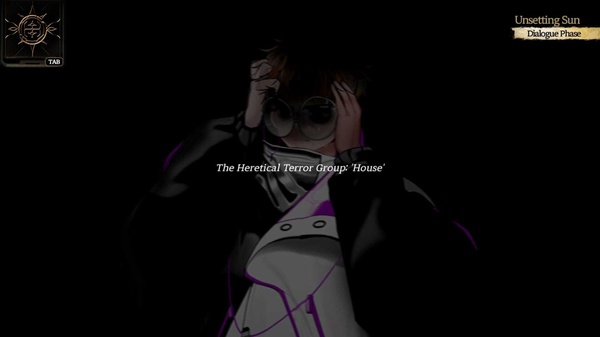
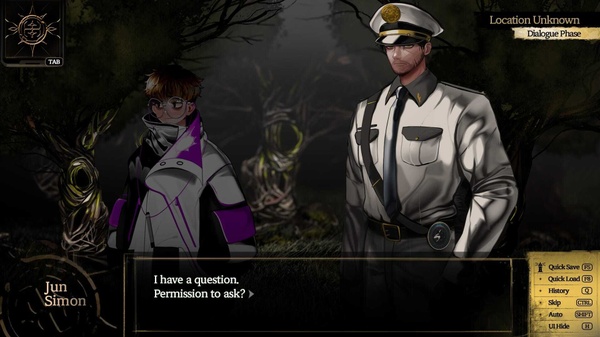
Having overcome this first hurdle, the first half of the demo adopts a deliberate and almost sedate pace, built around the social exploration of the village and dialogue with a cast of well-characterized supporting characters: from the indolent Cake to Merryberry Hoshi, owner of the local olive processing plant, passing through Acolyte Sophia Earl-Grey to the exuberant Iamol Phoby, willing to drag the rigid protagonist into embarrassing situations just to boost local tourism. However, when the leads seem to run out and Shepherd returns to the café awaiting Brand – who had meanwhile provided him with some additional coordinates over the phone about the nature of the heretical contamination – a second call shatters the village's calm: his superior was involved in an attack along the road which, while leaving him unharmed, obstructed access to the village.
In an attempt to reach him on foot after discovering his car has vanished, Shepherd falls into an ambush and is kidnapped. From this breaking point onwards, Inquisitor Shepherd changes its skin and accelerates with a tight crescendo. Locked in a room, the protagonist faces a point-and-click investigative phase where he must scour the environment, collect material clues, connect elements, and solve environmental puzzles – still contained in complexity, as is natural for an introductory chapter, but well integrated into the narrative. Here, Sin Powder in its Magenta variant makes its first appearance, a substance capable of altering the senses by inhibiting sight and hearing to amplify smell and taste, allowing the perception of invisible traces.
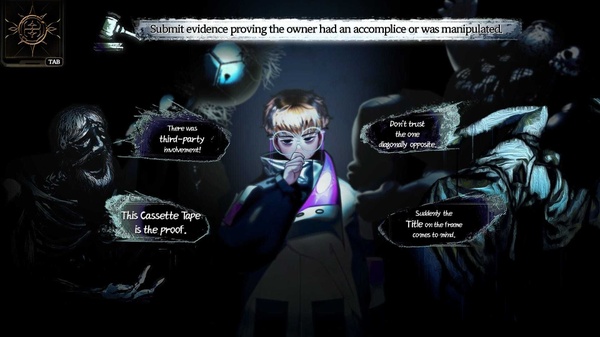
Once the pieces of the escape are reassembled, the game plays its most original card: a metaphysical courtroom suspended outside ordinary space, presided over by enigmatic entities who assist Shepherd, serving both as support and as a critical conscience regarding his fierce intransigence towards heretics. Here, the confrontation transforms into a high-tension psychological duel, governed by a ruthless rule: the Inquisitor is obligated to reach a verdict, under penalty of an immediate reversal of roles that would see him on the defendant's stand instead of the suspect. When dialectics are no longer enough to breach the interrogated's defenses, Sin Powder Cyan comes into play, shifting the gameplay's focus to the auditory plane: by carefully listening to the answers, one must identify the peaks of white noise that betray lies and the defendant's weak points, being careful not to make four total errors throughout the game to avoid a game over.
Vucrium, a Theocratic Paradise Where Suffering is Guilt
Adding depth to this gameplay structure is the construction of the nation of Vucrium, meticulously outlined in the Codex pages. The State is founded on the exclusive worship of crium, the only deity revealed to humanity by the prophet Crown, and on the absolute authority of the Unified Order, an institution where civil apparatus and religious hierarchy coincide without residue under the guidance of the Canon of crium. Unlike classic dystopias based on overt terror, this system enjoys the sincere consent of its inhabitants because it guarantees unprecedented material well-being: generous basic income, housing assistance, comprehensive medical care, and, above all, the tangible manifestation of the “grace of crium,” evidenced by an official one hundred percent healing rate from all pathologies and the almost total absence of common crimes and natural disasters, while conflicts with external nations remain confined to commercial, diplomatic, or doctrinal frictions.
In exchange for this prosperity, citizens are required to have unwavering mental adherence, an absolute prohibition against depicting crium in any artistic form, and strict observance of daily prayers, even facilitated by technology through Instant Worship, a portable device that monitors the faithful's psychophysical parameters before and after the ritual through a sequence of questions and answers. It is here that Narrowdeep's narrative universe recalls the preventive control architectures of Psycho-Pass and Minority Report: in a country where every illness heals and harmony reigns supreme, anyone suffering from unexplained physical pain, an unhealed grief, or persistent anger immediately becomes suspect. According to official doctrine, persistent malaise constitutes diagnostic proof of thoughts contrary to the Canon, transforming individual suffering into a crime against collective balance.
With the disappearance of petty crime, traditional police have been absorbed into the Order and demoted to Saint Police, a body relegated to administrative tasks, patrols, and wildlife management. Judicial and executive power, however, belongs to the Department of Heresy Judgment and its Inquisitors, who are equated in rank with Faith Leaders and authorized to conduct trials and execute sentences on the spot. Yet, even this guarded paradise bears an open wound: the terrorist organization House, responsible for a bloody attack in an amusement park that claimed countless faithful and has for years evaded every investigation, leaving behind anomalies that defy logic.
A Promise to Watch Towards 2027
It is therefore not surprising that the interrogation in the metaphysical courtroom leads to an epilogue far from a simple bureaucratic closure. The confession extorted from the interrogated tears open the veil on the infallibility of crium's dogmas themselves, revealing that the culprit caught in Hoshi is merely a sacrificial pawn within a much larger and more unsettling plot. Just as the scope of this discovery begins to unfold and a key character bursts onto the scene, the demo abruptly ends, cutting off at the most exciting moment.
At the end of the three-hour trial, Inquisitor Shepherd leaves the impression of being one of the most promising surprises expected for 2027. The ability to alternate a slow and deceptively mundane first part with a claustrophobic and tense second half, combined with intelligent use of audio in interrogations and a coherent worldbuilding in every theological and social detail, demonstrates how clear the Narrowdeep duo's vision is. If the full game can expand the complexity of environmental puzzles while maintaining this same clarity in writing, we will have an investigative thriller capable of leaving its mark.
Similar articles